Modified Mercalli Intensity VIII MMI VIII: Severe shaking
MMI VIII is severe shaking. Damage slight in specially designed structures; considerable with partial collapse in ordinary buildings; great in poorly built structures. Typical peak ground acceleration is 34–65% of gravity, and the damage potential is moderate to heavy.
What MMI VIII does
- Perceived shaking
- Severe
- Damage potential
- Moderate to heavy
- Peak acceleration
- 34–65% g
- Peak velocity
- 60–116 cm/s
What people feel
- Drivers strongly disturbed
- General panic; people difficult to control
- Difficult to stand even outdoors
What objects do
- Heavy furniture overturned and displaced
- Sand and mud ejected from ground
- Springs and wells affected; water levels change
What happens to buildings
- Brick buildings moderately to extremely damaged
- Walls fall; stone walls cracked seriously
- Chimneys, stacks, and columns fall
- Tree branch and trunk breakage
Also at this level, in other versions of the scale
- Monuments fall USGS, The Modified Mercalli Intensity Scale (table image on that page)
- Considerable damage in ordinary substantial buildings, with partial collapse USGS, The Modified Mercalli Intensity Scale (table image on that page)
- Damage great in poorly built structures USGS, The Modified Mercalli Intensity Scale (table image on that page)
Sources: the USGS Modified Mercalli Intensity scale (Wood and Neumann, 1931; Richter, 1958); ground-motion ranges from the USGS ShakeMap documentation (Worden et al., 2012), approximate and overlapping between neighbouring levels. See instrumental intensity. An older example: MMI VIII on YouTube.
Seen on camera: 4 clips rated MMI VIII
Each clip is rated from the effects it shows. A rating describes one camera at one place, not a whole town.
Showing 1 clip: Stores, MMI VIII. Wanted at this level: Pools, Warehouse, Skyscraper.
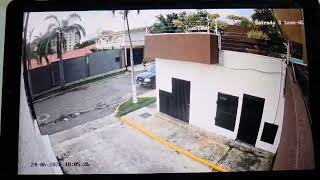
Simulated at MMI VIII
Our animations of named places where the estimated shaking reached this level, driven by simulated or recorded ground motion.
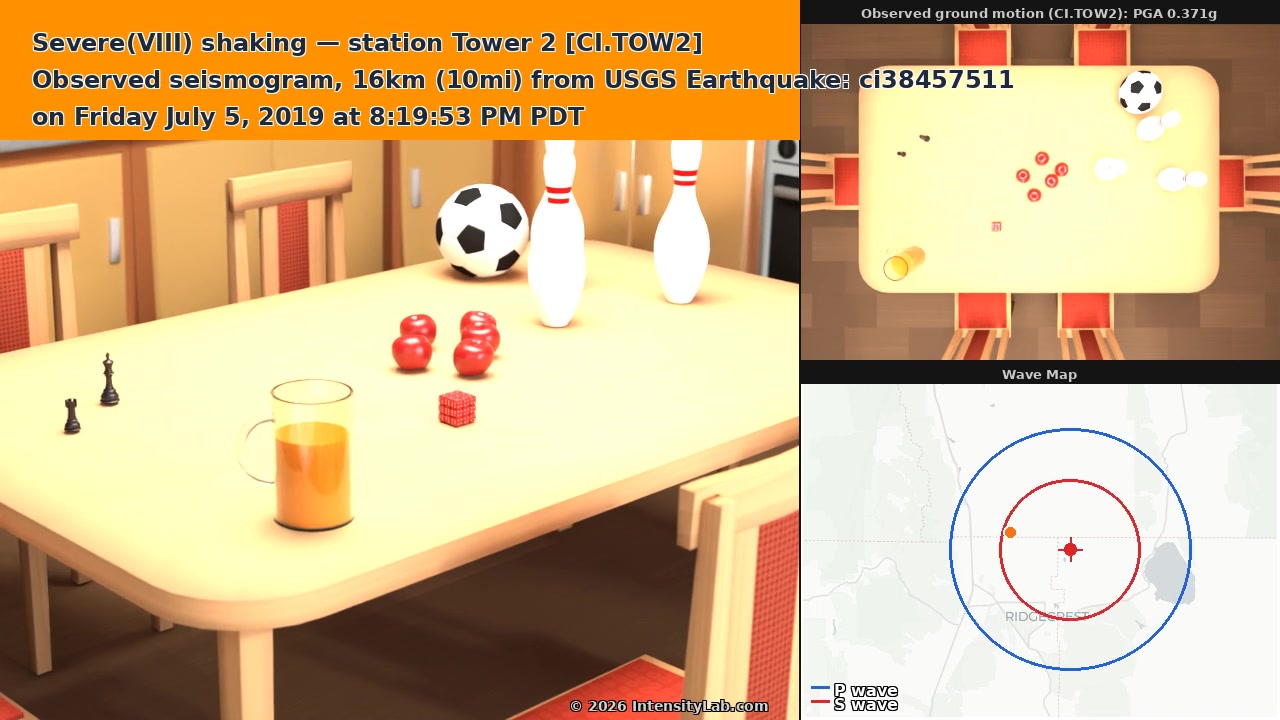
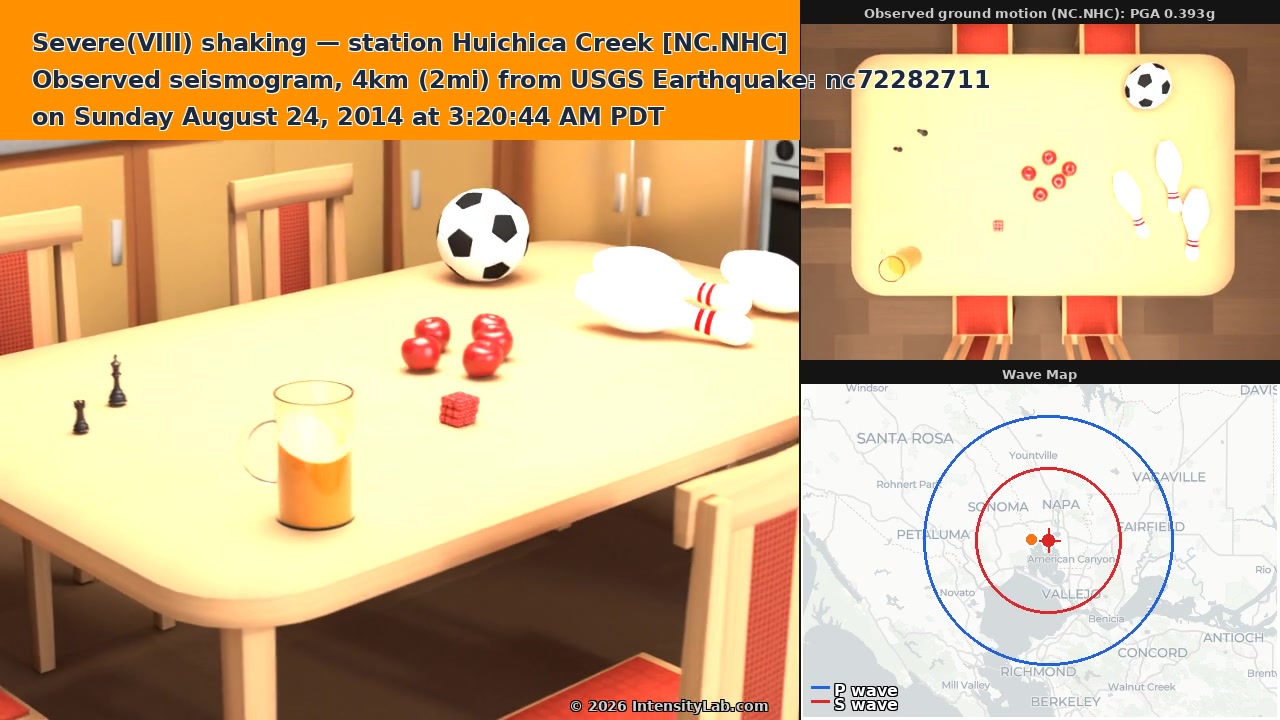
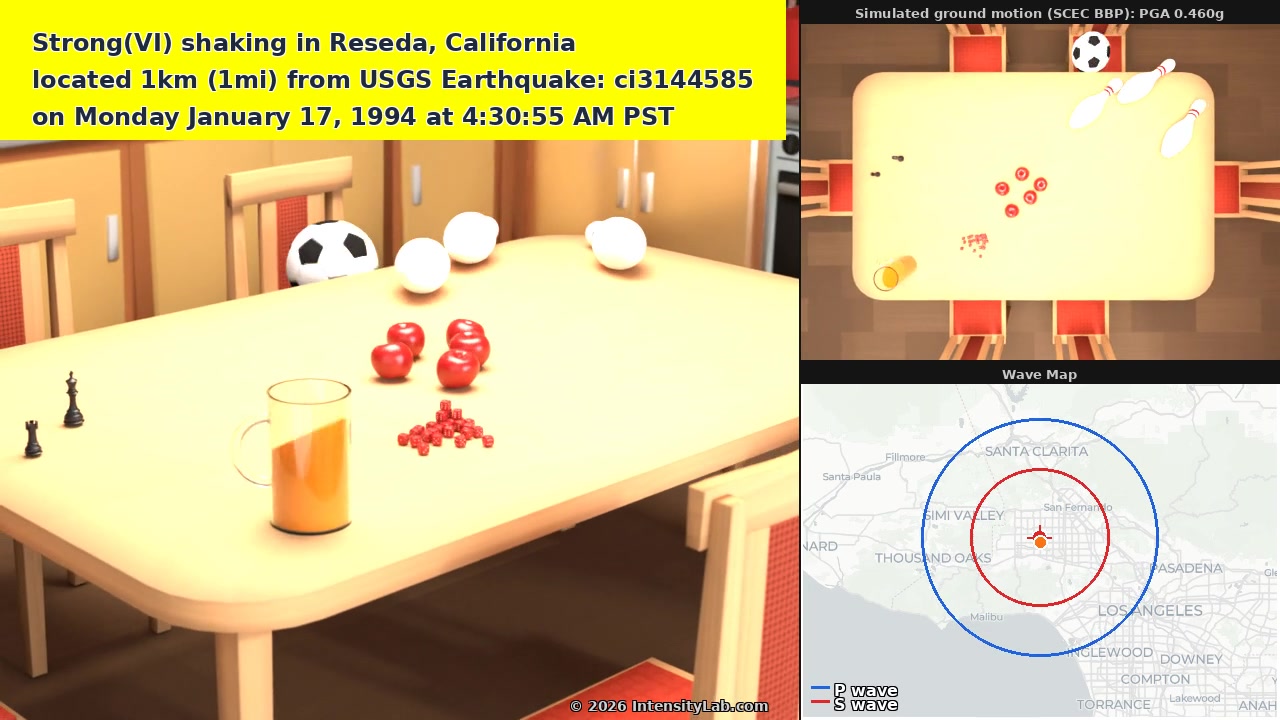
Recently at MMI VIII in our region
Earthquakes in the western United States and northern Mexico whose strongest shaking at a named place reached this level.
-
M6.4
15km WSW of Ferndale, CA
2022-12-20 · Rio Dell, MMI 7.6 VIII -
M6.9
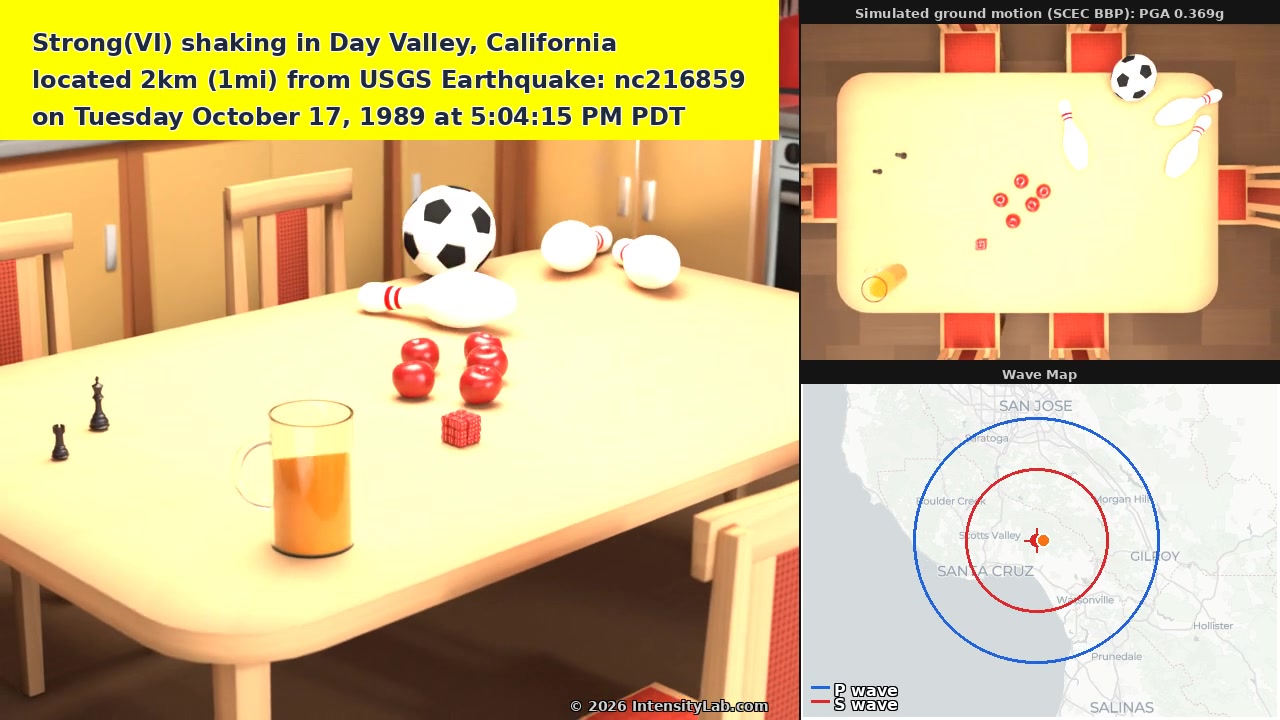
The 1989 Loma Prieta, California Earthquake
1989-10-18 · Day Valley, MMI 8.1 VIII
How MMI VIII is estimated
From instruments
USGS ShakeMap converts peak ground acceleration and velocity recorded at seismic stations into intensity. About 34–65% g of acceleration corresponds to MMI VIII.
From people's reports
USGS Did You Feel It? turns answers from thousands of people into a community intensity for each place. If you felt an earthquake, report it there.
From footage
We rate each clip with questions built from the scale's own statements: what people, objects and buildings do on camera. A rating describes one camera at one place.
Common questions
What magnitude causes MMI VIII?
It depends on distance and ground conditions, not magnitude alone. In our region, MMI VIII has come from earthquakes such as M6.4 near Ferndale, CA (2022); M6.9 The 1989 Loma Prieta, California Earthquake (1989).
What does MMI VIII feel like?
Drivers strongly disturbed. General panic; people difficult to control. Difficult to stand even outdoors.
How strong is the ground motion at MMI VIII?
Peak ground acceleration is typically 34–65% g and peak velocity 60–116 cm/s.
How is intensity different from magnitude?
Magnitude measures the energy an earthquake releases and is one number per earthquake. Intensity describes the shaking at one place, so a single earthquake produces many intensities, strongest near the fault and weaker with distance.